• Settings:
  •  
Menu

Jaguars in Costa Rica

Where & When to See Jaguars in Costa Rica

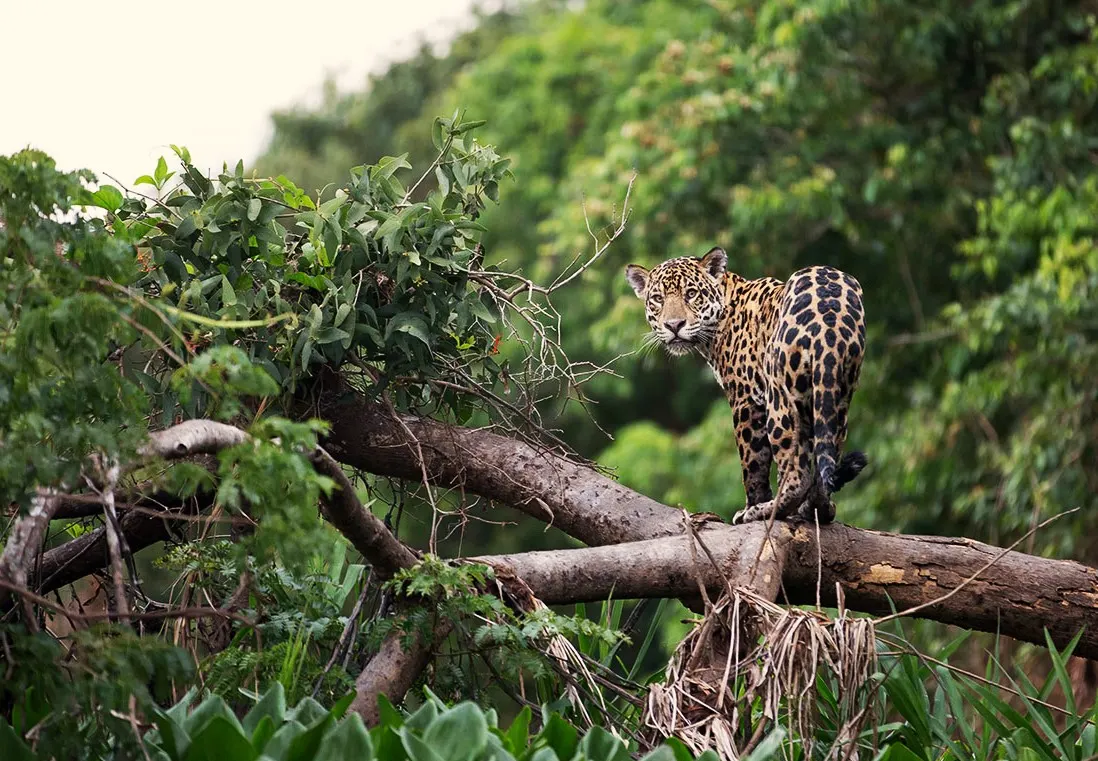
The jaguar (Panthera onca) is the most powerful predator in the Americas and the only big cat found in Costa Rica. Revered by ancient Mayan and Aztec civilizations as a symbol of strength and the spirit of the rainforest, the jaguar is an apex predator that plays a vital role in maintaining the balance of tropical ecosystems.

Elusive and rarely seen, these magnificent cats roam Costa Rica’s dense rainforests, river corridors, and coastal mangroves. With muscular bodies, rosette-patterned coats, and a bite strong enough to pierce the skull of their prey, jaguars are supreme hunters, capable of taking down caiman, deer, and even sea turtles.

Though sightings are far less predictable here than in Brazil’s Pantanal, Costa Rica offers a rare chance to explore untamed wilderness where jaguars still roam free, protected by extensive national parks and pioneering conservation projects.

Monteverde Santa Elena Jaguar

Best Places to See Jaguars in Costa Rica

1. Corcovado National Park – Osa Peninsula

Sightings are rare but possible, especially near the beaches where jaguars prey on nesting sea turtles. Even without a sighting, Corcovado offers world-class wildlife encounters, from tapirs and peccaries to scarlet macaws and spider monkeys.Located on Costa Rica’s remote southern Pacific coast, Corcovado National Park is the country’s top destination for spotting wild jaguars. This vast rainforest — described by National Geographic as “the most biologically intense place on Earth” — is home to one of Central America’s healthiest jaguar populations.

2. Tortuguero National Park – Caribbean Coast

Famous for its sea turtle nesting beaches, Tortuguero also supports a small but stable population of jaguars that have adapted to hunt turtles. Research teams from the Jaguar Conservation Program monitor this unique predator-prey relationship, and visitors occasionally glimpse tracks or fleeting movements in the forest.

3. La Amistad International Park

Straddling the border with Panama, La Amistad is Costa Rica’s largest and wildest protected area. Dense, mountainous, and rarely visited, it offers a true wilderness experience and supports both jaguars and pumas. While sightings are extremely rare, it represents vital habitat for the species’ long-term survival.

Month-by-Month: When to See Jaguars in Costa Rica


Dry, sunny, and ideal for exploring Corcovado. Forest trails are open and rivers low, offering the best access for wildlife tracking. Excellent month for photography and birdlife.

Still part of the dry season. Great visibility and consistent wildlife activity make this one of the top months for travel. Jaguars are occasionally sighted near the coast in the Osa Peninsula.

Peak dry season and one of the best times to visit Costa Rica for jaguars. The rainforest canopy is thinner, making wildlife easier to spot, and conditions in both Corcovado and Tortuguero are excellent.

Temperatures rise ahead of the rains, and water sources dry up, drawing animals and sometimes jaguars, closer to rivers and lagoons. Still a prime time for wildlife in Costa Rica.

The start of the green season. Short afternoon rains refresh the forest, and turtle nesting begins on the Caribbean coast, increasing jaguar activity around Tortuguero.

Rainfall increases but travel is still rewarding, particularly for those visiting for turtle nesting and the lush, vibrant rainforest. Jaguar tracks are often seen near beaches.

A short mid-year dry spell brings excellent conditions again. Jaguars follow turtle nesting cycles, and this is one of the best months for conservation-focused safaris in Tortuguero.

Prime month for nesting turtles and potential jaguar activity along the coast. Forests are dense but teeming with life; expect dramatic skies and green scenery.

Rainfall increases, but turtle nesting peaks, and jaguar activity remains high around nesting beaches. Ideal for dedicated wildlife travellers seeking authentic wilderness.

The wettest month on the Pacific side but still rewarding on the Caribbean coast. Jaguars continue to hunt nesting turtles in Tortuguero.

Rains begin to ease, and wildlife becomes more visible again in the Osa Peninsula. A good transition month before the dry season returns.

The dry season begins, bringing sunshine and optimal travel conditions. Forests are vibrant after the rains, and it’s one of the best times to visit Corcovado and Tortuguero.

How to See Jaguars in Costa Rica

Seeing a jaguar in Costa Rica requires patience, luck, and expert guidance. Most sightings occur during multi-day treks through Corcovado National Park, where local naturalist guides read subtle signs, paw prints in the sand, broken branches, or distant calls, to locate these elusive cats. In Tortuguero, jaguar researchers monitor turtle-nesting beaches, offering travellers an extraordinary chance to witness wild jaguar behaviour indirectly through hands-on conservation experiences.

Even without a sighting, the thrill of walking through pristine rainforest knowing jaguars are near is unforgettable, every rustle, track, or echo of movement adds to the anticipation. Many travellers describe the experience as humbling, a reminder that this is one of the few places in the Americas where jaguars still reign undisputed.

Natural World Safaris works closely with conservation partners to ensure every jaguar safari directly contributes to ongoing protection and research in Costa Rica’s most critical habitats. Through responsible travel, each journey helps fund anti-poaching patrols, habitat restoration, and the scientific monitoring of these extraordinary predators, securing their future in one of the world’s most biodiverse landscapes.

Talk to a Latin America Specialist Today