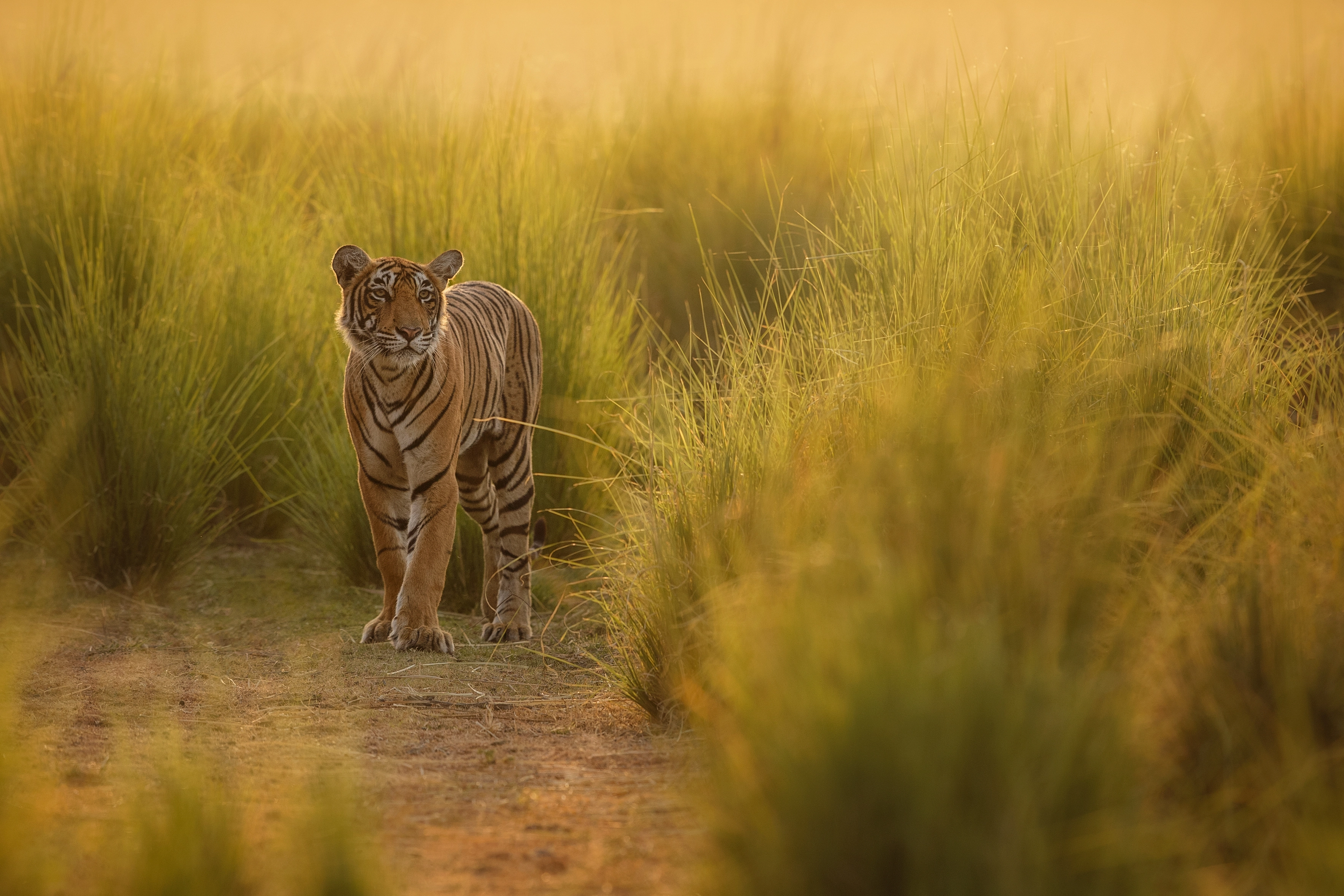
Tigers (Panthera tigris) are the largest members of the cat family and among the world’s most powerful predators. Adult males can reach over three metres in length and weigh up to 300 kilograms. Solitary and territorial, they rely on stealth and strength to ambush prey. Unlike most big cats, Bengal tigers are strong swimmers and often hunt or cool off in water.
Ranthambore National Park, in Rajasthan, is one of India’s premier destinations for tiger sightings. Its mix of rocky hills, dry deciduous forest, and lakes creates an ideal habitat where these big cats thrive. Ranthambore’s tigers are famous for their visibility and confidence, often seen lounging near waterholes or stalking through the ruins of ancient temples. Each tiger is uniquely identified by its stripe pattern, allowing rangers to monitor family lineages and behaviour closely.
Conservation in Ranthambore has turned this former royal hunting ground into a global success story. Once under severe threat from poaching and habitat loss, the tiger population has rebounded thanks to strict protection, community engagement, and the success of Project Tiger. Sustainable tourism now plays a vital role in funding continued monitoring and anti-poaching patrols, ensuring that Ranthambore remains one of the best places in the world to see wild tigers.