

Wellness & Underwater Worlds of Indonesia
Combine Bali’s world-class wellness with Raja Ampat’s underwater wonders on this luxurious Indonesian adventure.
From $13,000 per personIndonesia is the only country in the world where all three species of orangutan are found — the Bornean, Sumatran, and the critically endangered Tapanuli orangutan, the rarest great ape on Earth. These intelligent primates, whose name means “person of the forest,” are Asia’s only great apes and among humanity’s closest relatives, sharing around 97% of our DNA.
Watching an orangutan in the wild is one of Indonesia’s most extraordinary wildlife experiences. Their slow, deliberate movements through the canopy, long shaggy red hair, and curious gaze reveal a deep intelligence and emotional connection. Mothers care for their infants for up to eight years, teaching them how to forage, build nests, and navigate the forest.
Although deforestation and habitat loss have greatly reduced their numbers, Indonesia remains one of the world’s best places to see orangutans in the wild, thanks to pioneering conservation projects and protected rainforest reserves across Sumatra and Kalimantan (Indonesian Borneo).
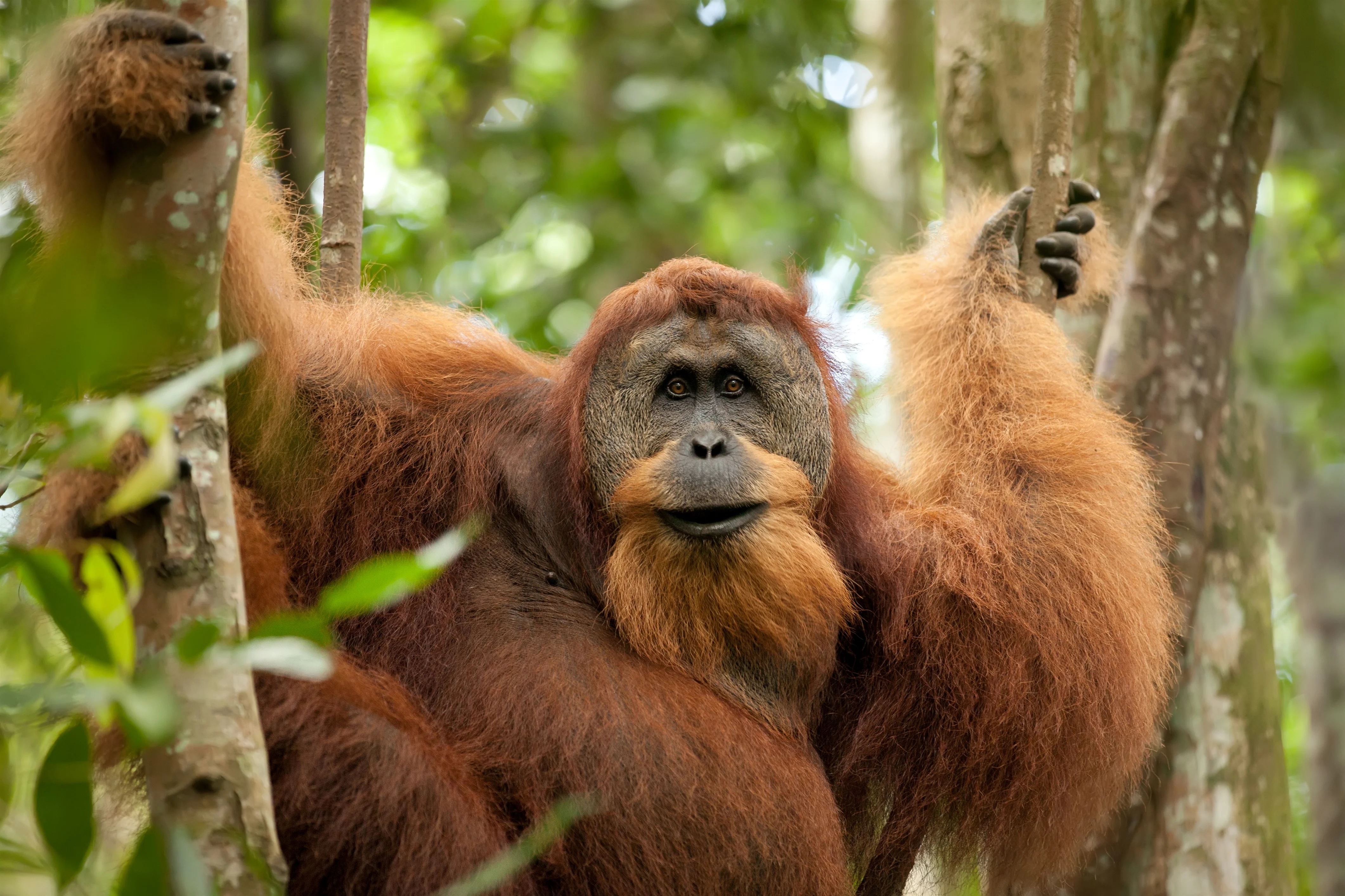
Part of the UNESCO-listed Leuser Ecosystem, Gunung Leuser National Park is one of the most important sanctuaries for wild orangutans. Trekking through dense rainforest near Bukit Lawang, visitors can often spot orangutans foraging in fruiting trees or mothers carrying young. The park is also home to elephants, rhinos, and tigers — making it one of the richest biodiversity hotspots in Asia.
Discovered as a distinct species in 2017, the Tapanuli orangutan (Pongo tapanuliensis) is the rarest great ape in existence, with fewer than 800 individuals surviving in a small area of northern Sumatra. Visits here are limited and guided only by conservation experts, offering a rare chance to learn about vital research and protection efforts.
This lush park in Central Kalimantan is one of Indonesia’s best-known orangutan destinations. The Camp Leakey Research Station, established in the 1970s by famed primatologist Dr Biruté Galdikas, remains a cornerstone of orangutan research and rehabilitation. Visitors explore by klotok riverboat, gliding along the Sekonyer River to see orangutans in the treetops or at feeding platforms.
A remote peat swamp forest accessible from Palangka Raya, Sebangau supports one of the largest wild orangutan populations in Borneo. It offers a quieter, less-developed alternative for travellers seeking a more off-the-beaten-track experience.

The heart of the wet season. Heavy rainfall across Sumatra and Kalimantan can make trekking trails muddy and boat travel along the rivers slower. Wildlife sightings are still possible around feeding stations like Camp Leakey, but this is best suited to adventurous travellers who don’t mind rain and humidity.
Still very wet but slightly calmer than January. Forests are lush and full of new growth, and fewer tourists make this a quiet time to visit. Good for photography thanks to dramatic skies and misty mornings.
The rains begin to taper off toward the end of the month, signalling the start of improving conditions. Orangutans become more active as fruiting trees start to bloom, especially around Bukit Lawang and Tanjung Puting.
Marks the beginning of the dry season and the start of the best orangutan-viewing months. Trails are firmer, river levels are ideal for boat travel, and orangutans are frequently seen feeding in the canopy.
Excellent weather and abundant fruit make May one of the most rewarding times to see orangutans. Mothers with infants are often visible, and the forests of both Sumatra and Kalimantan are buzzing with activity.
Prime orangutan season across Indonesia. Dry, sunny days and comfortable trekking conditions make this ideal for visiting Gunung Leuser or cruising Tanjung Puting’s rivers. Sightings are regular and photography conditions superb.
Peak travel season and one of the best months overall for orangutan encounters. Orangutans are active, trails are dry, and wildlife is concentrated near fruiting trees. Advance bookings are essential for popular lodges and klotok cruises.
Another excellent month, with dry, bright days and high orangutan visibility. Great for families and travellers combining wildlife safaris with beach time elsewhere in Indonesia.
Still dry and warm, though light rains may begin late in the month. Fewer visitors mean a quieter experience without compromising sightings — ideal for those seeking a more private safari.
The shoulder of the wet season. Occasional showers return but conditions remain good, and the rainforest takes on vibrant post-rain colours. Orangutans are still commonly seen in Sumatra’s Gunung Leuser.
The onset of heavier rains and increased humidity, particularly in Kalimantan. While wild sightings become less predictable, rehabilitation centres like Camp Leakey and Bukit Lawang offer consistent opportunities to observe orangutans up close.
The wettest month in most orangutan regions. Although trekking is limited, this is an excellent time for conservation-focused travel — visiting research stations and supporting local rehabilitation efforts during their quieter season.
Seeing orangutans in Indonesia is an intimate, low-impact experience designed around responsible wildlife tourism. In Kalimantan, traditional klotok riverboats glide quietly along jungle waterways, allowing travellers to spot orangutans feeding, climbing, or crossing the canopy above. In Sumatra, guided treks through Gunung Leuser National Park bring you deep into primary forest, where wild orangutans swing freely among towering fig trees.
Visits to research and rehabilitation centres, such as Camp Leakey or Bukit Lawang, complement these wild encounters, helping visitors understand the challenges of orangutan conservation. Each journey is crafted to ensure your visit directly supports local communities and the protection of Indonesia’s rainforests.

Indonesia has some of the highest levels of biodiversity and endemicity in the world, due to its distribution over a vast and sprawling archipelago.